
Structured data cabling
Cable runs from a central rack to each outlet, terminated on patch panels and labelled at both ends so faults can be traced later.
Office 5B, 1st Floor, Royal Plaza, 6th Road, Rawalpindi
Networks and cabling
Cameras, door controllers, attendance terminals and IP phones all end up on the same cabling, which is why a network installed carelessly turns every later fault into guesswork. We label ports, dress cable properly, record what runs where and leave spare capacity in the switch and the rack, so the next person to open that cabinet can work out the building in minutes.
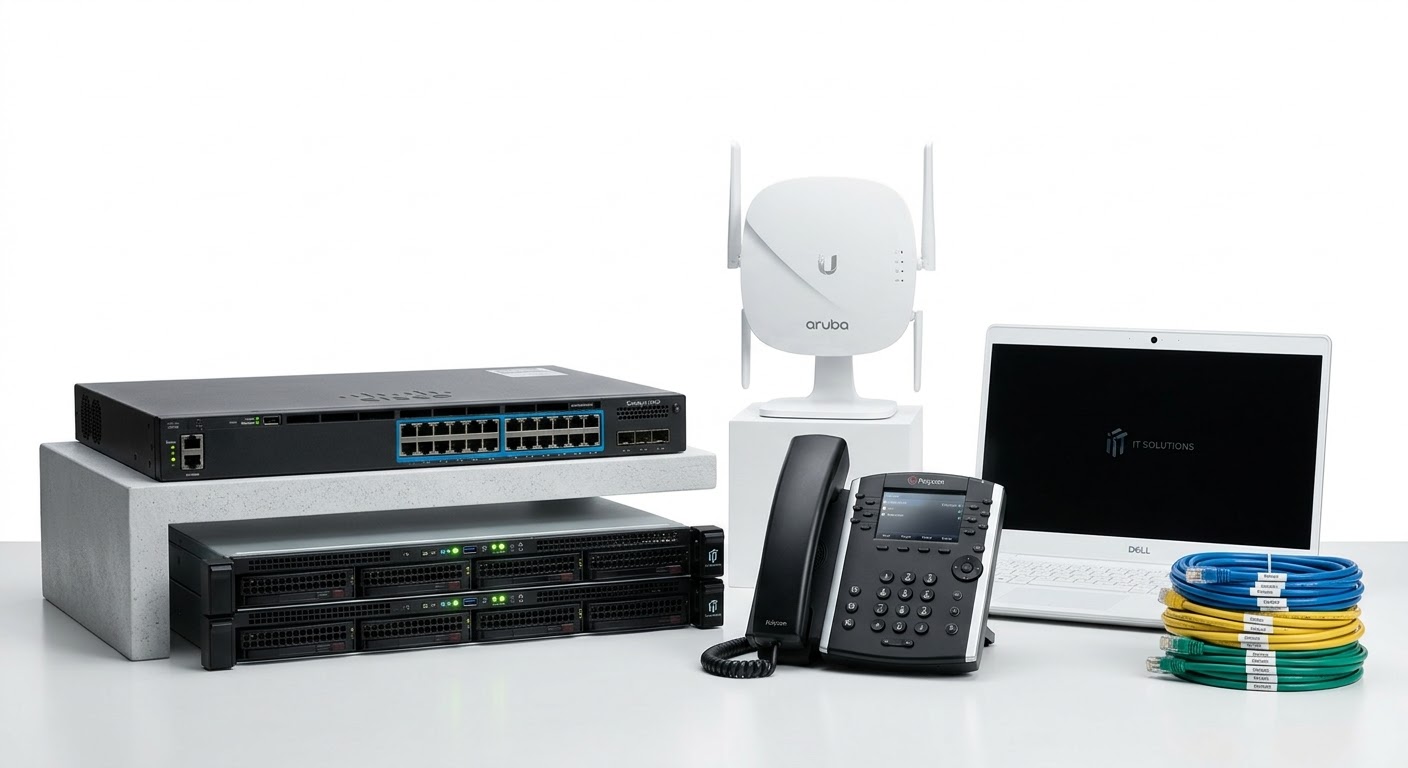
Cable runs from a central rack to each outlet, terminated on patch panels and labelled at both ends so faults can be traced later.
Fiber between buildings, floors or distant blocks where copper distance limits or electrical noise make it the right choice.
Switches sized for the device count with headroom, and PoE where cameras, access points and door controllers take power over the same cable.
Wall and floor racks, patch panels, dressed cabling and labelling, so the next person to work on it can see what connects where.
Access points positioned for real coverage across the building rather than a single router expected to cover everything.
Router, switching, addressing and wireless configured together so devices, printers and shared resources work reliably.
We agree outlet positions, the rack location, cable routes and the power available at the rack.
A written quotation covering cable, outlets, patch panels, switches, rack, containment and the labour to install it.
Trunking, tray or conduit installed, then cable pulled, avoiding routes that will cause interference or make later access impossible.
Outlets and patch panels terminated and every run labelled at both ends.
Links tested, switches configured and the rack documented so future work does not start with guesswork.
Switching and network hardware are selected to suit the site and the devices connecting to it.
Manufacturer names shown here belong to those manufacturers. We list them because these are the lines we buy, fit and repair — not to imply any distributorship or formal partnership.
We also take on existing networks — tracing unlabelled cabling, tidying and re-terminating racks, replacing failing switches and resolving Wi-Fi coverage complaints.
We do not publish prices, because the same job varies widely between sites. A written quotation follows a survey, and these are the factors that move the figure.
We are based at Office 5B, 1st Floor, Royal Plaza, 6th Road, Rawalpindi, Pakistan and carry out it solutions work across Rawalpindi and Islamabad. See areas we serve for more detail, or contact us to arrange a site survey.
Structured cabling is a planned cabling system where every outlet runs back to a central rack and patch panel, and every run is labelled at both ends. The alternative — cable added ad hoc as devices are needed — works until something breaks, at which point nobody can tell which cable serves what. Structured cabling costs a little more to install and much less to live with.
Power over Ethernet delivers electrical power and network data down the same cable. For CCTV and access control it means no separate power supply at each camera or door, so there is one cable to run, one to fault-find, and a central point where devices can be power-cycled.
Usually yes. Most coverage complaints come from one router being asked to cover a building it cannot reach through, especially with concrete walls. The fix is normally cabled access points positioned around the building rather than a more powerful single device.
Only where copper is unsuitable — typically runs beyond copper distance limits, links between separate buildings, or routes with heavy electrical interference. Within a normal floor, copper is usually the appropriate and more economical choice.
Yes. A properly designed structured cabling system carries data, IP telephony, IP cameras and access control devices over the same standard outlets, which is why it is worth installing before the individual systems rather than after.
A camera is only worth its price if it is looking at something that matters, in light it can actually handle, recording to a disk with room left on it.
An office exchange earns its keep in small ways: a call reaching the right desk, one number shared across a department, staff dialling two digits instead of a mobile.
A key tells you nothing.